At ScarletSoirée, we understand that your red prom dress is more than just an outfit—it’s a statement piece, a memory, and often an investment in a special moment of your life. Because of its bold color and delicate construction, cleaning it improperly can lead to irreversible damage such as fading, shrinking, fabric distortion, or loss of its elegant finish.
This comprehensive guide on How to Wash Your Red Prom Dress Without Ruining It will walk you through everything you need to know—from identifying fabric types and reading care labels to choosing the right cleaning method, removing stains safely, and preserving your dress for the long term. Along the way, we’ll incorporate essential semantic keywords such as cleaning formal dresses, hand washing delicate garments, satin dress care, chiffon dress washing guide, stain removal for evening gowns, and more to ensure both clarity and SEO completeness.
Why Red Prom Dresses Require Special Care?

Red prom dresses are visually striking, but their vibrant dye and delicate materials make them particularly vulnerable during cleaning. One of the biggest challenges is color fading and dye bleeding, especially if the dress is washed incorrectly or exposed to heat.
Unlike everyday clothing, formal dresses often use:
- Delicate fabrics
- Intricate embellishments
- Layered construction
- Specialty dyes
Improper washing methods can result in:
- Loss of color intensity
- Fabric shrinkage
- Damage to sequins or embroidery
- Wrinkles that are difficult to remove
- Distortion of the dress shape
Understanding these risks is the first step in learning how to clean delicate evening gowns safely.
Check the Care Label Before Washing
Before doing anything, always check the care label attached to your dress. Care labels typically indicate:
- Whether the dress is hand wash only
- Whether it requires dry cleaning
- Recommended water temperature
- Fabric-specific instructions
If the label says “dry clean only,” it is usually best to follow that instruction. Attempting home washing may risk damaging the garment. If the label is missing, damaged, or unclear, proceed with extra caution by treating the dress as delicate and opting for hand washing or professional cleaning.
Identify the Fabric Type of Your Red Prom Dress
Taking the time to identify the fabric ensures that the chosen cleaning method aligns with the garment’s structural and chemical characteristics.
Common Fabrics Used in Prom Dresses
Prom dresses are typically crafted from a range of fabrics, each with distinct properties:
- Satin – Known for its smooth, glossy finish, satin enhances the visual appeal of red dresses but is prone to water spotting and visible marks if not handled carefully.
- Chiffon – A lightweight, sheer fabric that drapes elegantly but is highly delicate and susceptible to tearing or snagging.
- Silk – A premium natural fiber that offers a luxurious feel, yet it is extremely sensitive to water, heat, and agitation, requiring meticulous care.
- Velvet – Characterized by its rich texture and depth, velvet demands specialized cleaning methods to preserve its pile and avoid crushing the fibers.
- Lace – Often used for detailing or overlays, lace is intricate and fragile, making it vulnerable to stretching or damage during washing.
- Polyester blends – More resilient compared to natural fibers, these are commonly used for durability, but still benefit from gentle cleaning practices to maintain appearance and longevity.
Why Fabric Type Matters
Each fabric reacts uniquely to key cleaning variables, which must be carefully controlled to avoid compromising the dress:
- Water temperature can affect dye stability and fiber integrity
- Detergents may interact differently with natural versus synthetic fibers
- Agitation levels determine the risk of stretching, tearing, or distortion
- Drying methods influence shape retention and color preservation
For instance, silk requires minimal handling and cold water exposure, velvet should never be soaked due to its structure, and chiffon must be treated with extreme care to prevent tearing. Recognizing these distinctions allows for informed decisions that align with fabric-specific washing instructions, ultimately reducing the risk of irreversible damage.
Pre-Washing Preparation
Proper preparation before washing plays a critical role in preserving the quality and appearance of a red prom dress. This stage helps identify potential problem areas, assess the level of cleaning required, and determine whether spot treatment alone may be sufficient instead of a full wash.
Inspect the Dress Carefully
A thorough inspection should be conducted under good lighting to detect any visible or hidden issues. Key areas to evaluate include:
- Stains such as makeup, food, sweat, or oil that may require targeted treatment
- Loose threads or weakened seams that could worsen during washing
- Embellishments like beads, sequins, or embroidery that may be fragile or partially detached
- Discoloration or dye inconsistencies that may indicate previous damage or color instability
This assessment not only helps prioritize cleaning needs but also minimizes unnecessary exposure of the entire garment to water and detergent. Identifying these factors early supports a more controlled and strategic cleaning approach.
Spot Cleaning First
Spot cleaning is an essential preliminary step when dealing with delicate formal wear, especially for localized stains. Addressing stains individually reduces the need for full immersion washing, thereby lowering the overall risk to the garment.
- Apply a small amount of mild detergent or a fabric-safe stain remover
- Use a soft cloth, cotton swab, or clean sponge to gently dab the affected area
- Avoid rubbing, as friction can spread the stain or damage fibers
- Always test the cleaning solution on a hidden or inconspicuous section of the dress first to ensure it does not affect color or texture
This method is particularly effective for early-stage stain removal and helps maintain the integrity of delicate fabrics. By treating stains in advance, the washing process becomes less intensive, reducing the likelihood of color fading, fabric distortion, or unnecessary wear.
How to Hand Wash a Red Prom Dress?
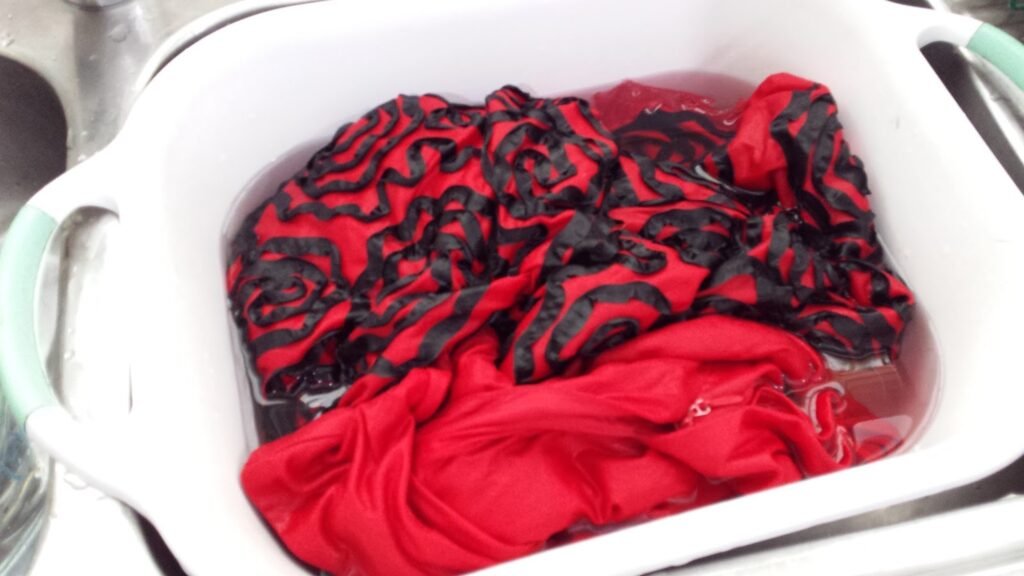
Hand washing remains one of the most reliable and controlled methods for cleaning delicate formalwear, particularly when dealing with fabrics that are sensitive to heat, friction, or machine agitation. When executed correctly, it helps maintain the integrity of the fabric while minimizing the risk of color fading, shrinkage, or structural damage.
When Hand Washing Is Appropriate?
Hand washing is best suited for dresses made from lightweight or delicate materials that require gentle handling, including:
- Chiffon dresses
- Silk gowns
- Lace dresses
- Lightly soiled garments with minimal staining
This method is especially recommended when the dress does not contain heavy structuring or intricate embellishments that may be compromised by water immersion or excessive movement. It is a practical approach for garments that fall under delicate fabric care instructions and do not explicitly require professional cleaning.
Step-by-Step Hand Washing Guide
A structured and careful process ensures effective cleaning while preserving the garment’s quality:
- Prepare a clean basin or tub filled with cold water to prevent color bleeding and fabric shrinkage
- Add a small amount of mild detergent formulated for delicate fabrics, avoiding harsh chemicals
- Gently submerge the dress, ensuring it is fully immersed without forcing the material
- Allow the garment to soak for approximately 10–20 minutes to loosen dirt and residues
- Lightly agitate the water using slow, controlled movements without scrubbing the fabric directly
- Gently press the fabric sections to release trapped dirt and impurities
- Drain the basin and rinse thoroughly with cold water until all detergent is completely removed
This controlled process aligns with best practices for hand washing delicate garments, ensuring that cleaning is achieved without unnecessary stress on the fibers.
Important Tips
To maintain the structural and visual quality of the dress, several precautions should be observed:
- Avoid wringing, twisting, or stretching the fabric, as this can distort its shape
- Never use hot water, as it may lead to color fading, dye bleeding, or fabric shrinkage
- Handle embellishments such as beads, sequins, or embroidery with extra care to prevent loosening or damage
- Refrain from scrubbing stained areas aggressively, as friction can weaken fibers and spread stains
Following these guidelines helps preserve both the appearance and durability of the garment while reducing the likelihood of irreversible damage.
How to Dry a Red Prom Dress Safely?
Drying is a critical stage in the cleaning process, as improper drying techniques can undo the benefits of careful washing. The goal is to remove moisture efficiently while maintaining the garment’s original shape, color, and texture.
Air Drying Method
Air drying is the preferred method for formal dresses due to its gentle and non-invasive nature:
- Lay the dress flat on a clean, absorbent towel or hang it using a padded hanger to maintain structure
- Allow excess water to drain naturally without applying pressure or force
- Place the garment in a well-ventilated area to promote even drying
- Keep the dress away from direct sunlight, which may cause fading or uneven discoloration
This method ensures gradual moisture removal while minimizing stress on delicate fibers.
Why Avoid Heat?
Exposure to heat during drying can significantly compromise the integrity of the fabric:
- Heat can weaken or damage delicate fibers
- It may accelerate color fading, particularly in richly dyed red fabrics
- Certain materials may shrink or lose their original dimensions
- The overall structure of the dress can become distorted or misshapen
Avoiding heat is essential to maintain both the aesthetic and structural qualities of formal wear.
Best Practices
To ensure optimal drying results:
- Use a clean towel to gently absorb excess moisture before air drying
- Reshape the dress while it is still damp to preserve its intended silhouette
- Avoid hanging heavy, water-laden garments without proper support, as this may stretch the fabric
Proper drying techniques play a key role in preserving formal dresses after cleaning and extending their usable lifespan.
Dry Cleaning vs. Hand Washing
Selecting between dry cleaning and hand washing depends on the garment’s fabric composition, construction, and care requirements.
When to Choose Dry Cleaning
Professional dry cleaning is recommended in the following cases:
- Dresses labeled explicitly as “dry clean only”
- Garments with heavy embellishments, beadwork, or intricate detailing
- Structured gowns featuring internal lining, boning, or corsetry
- Fabrics such as velvet or complex blends that require specialized treatment
Dry cleaning is often the safest option for preserving the integrity of high-value or structurally complex dresses.
Advantages of Professional Cleaning
- Expertise in handling delicate and specialty fabrics
- Access to professional-grade equipment and solvents
- Reduced risk of damage compared to at-home methods
- More effective treatment of stubborn or deeply embedded stains
These advantages make professional services a preferred solution for intricate garments that demand precise care.
When Hand Washing Is Suitable?
Hand washing is appropriate when:
- The dress features a simple design
- The fabric is lightweight and non-structured
- There are no heavy embellishments or delicate attachments
- The garment has mild dirt or light staining
Understanding these conditions helps determine the safest and most effective cleaning approach for each specific dress.
How to Remove Stains from a Red Prom Dress?
Stain management is a critical component of maintaining formal wear, as stains can become more difficult to remove over time if not treated promptly and correctly.
Common Types of Stains
Typical stains found on prom dresses include:
- Makeup residues
- Food spills
- Oil-based stains
- Sweat marks
- Perfume or deodorant traces
Each type of stain may require slightly different handling techniques, but all should be addressed with care to avoid damaging the fabric.
Safe Stain Removal Techniques
Effective stain removal should prioritize gentleness and precision:
- Use a mild detergent diluted in cold water to avoid harsh chemical reactions
- Dab the stain gently with a clean cloth or cotton pad rather than rubbing
- Avoid the use of bleach or strong chemical agents that may alter color or weaken fibers
- Do not scrub aggressively, as friction can spread the stain or damage the fabric surface
- Treat stains as soon as possible to prevent them from setting into the material
For more persistent stains:
- Repeat the spot cleaning process if necessary
- Consider professional cleaning for deep or stubborn stains
- Avoid prolonged soaking, which may affect delicate fabrics and dye stability
These approaches align with best practices for stain removal for evening gowns, ensuring stains are treated effectively while maintaining the garment’s overall quality and appearance.
Common Mistakes to Avoid When Washing
Avoiding mistakes is just as important as following the correct steps.
- Using hot water
- Machine washing delicate dresses
- Using harsh detergents
- Scrubbing stains aggressively
- Over-soaking the fabric
- Wringing or twisting the dress
- Drying in direct sunlight or heat
- Ignoring care labels
These mistakes often lead to:
- Color fading
- Fabric weakening
- Permanent damage
Being aware of these pitfalls ensures safer garment care.
How to Prevent Color Fading in Red Dresses?
Preserving the rich, vibrant tone of a red prom dress requires careful attention throughout the cleaning process. Red dyes are often more susceptible to fading and bleeding compared to other colors, making controlled washing conditions and gentle handling essential to maintain the original appearance of the fabric.
Best Practices for Color Protection
Implementing the following practices helps minimize the risk of color loss and ensures the dress retains its visual intensity over time:
- Always use cold water, as higher temperatures can weaken dye bonds and accelerate fading
- Wash the dress separately to avoid color transfer from other garments
- Choose a color-safe detergent specifically formulated to protect dyes and delicate fabrics
- Turn the dress inside out before washing to reduce direct friction on the outer surface
- Avoid prolonged soaking, which may lead to dye leaching and uneven coloration
- Limit exposure to direct sunlight during drying, as UV rays can gradually break down color pigments
Red fabrics, in particular, require consistent care during both washing and drying stages to prevent dye bleeding and maintain uniform color distribution. A cautious and controlled approach significantly reduces the likelihood of fading and helps preserve the garment’s original vibrancy.
Post-Wash Care and Storage
Proper post-wash care plays a vital role in maintaining the structure, appearance, and longevity of a red prom dress. Once the garment is thoroughly cleaned and completely dry, correct storage practices help protect it from environmental factors that may cause deterioration over time.
Storage Tips
To ensure optimal preservation:
- Store the dress in a breathable garment bag to allow airflow while protecting against dust
- Keep the garment in a cool, dry environment to prevent moisture buildup and mildew
- Avoid plastic covers that can trap humidity, potentially leading to fabric damage or discoloration
- Use padded hangers to maintain the dress’s shape and prevent stress on the shoulders
- Prevent overcrowding in closets to avoid compression, wrinkling, or fabric deformation
These storage conditions help maintain both the aesthetic quality and structural integrity of the dress after cleaning.
Maintaining Shape and Quality
In addition to proper storage, ongoing care ensures the dress remains in excellent condition:
- Confirm the dress is completely dry before placing it in storage to avoid moisture-related issues
- Smooth out wrinkles gently using hands or low-impact steaming methods if appropriate
- Avoid folding structured gowns for extended periods, as creases may become permanent
- Keep the dress protected from humidity, dust, and environmental contaminants
Consistent attention to these details supports long-term maintenance and helps preserve the garment’s original silhouette and finish.
Long-Term Preservation Tips

For dresses intended to be kept over an extended period, additional preservation measures are recommended to ensure they remain in pristine condition:
- Periodically inspect the dress for signs of damage, discoloration, or fabric weakening
- Clean the garment thoroughly before long-term storage to prevent stains from setting over time
- Use acid-free tissue paper when folding to protect fabric fibers and prevent creasing or yellowing
- Consider professional preservation services for high-value or sentimental garments
- Store the dress away from direct sunlight, heat sources, and high-humidity environments
These practices are essential for maintaining the integrity of formalwear over time and are widely regarded as best-in-class methods for long-term preservation of formal dresses.
FAQs About How To Wash Your Red Prom Dress Without Ruining It?
Can you machine wash a red prom dress?
Machine washing is generally not recommended, particularly for delicate fabrics or structured gowns. The mechanical agitation, combined with water exposure, can lead to fabric damage, shrinkage, and dye bleeding. Hand washing or professional cleaning is typically a safer alternative.
How often should a prom dress be cleaned?
Cleaning should be performed only when necessary, such as after wearing or when visible stains are present. Overwashing can accelerate fabric wear and reduce the garment’s lifespan.
What detergent is best for delicate fabrics?
Mild, fragrance-free detergents designed specifically for delicate garments are ideal. These formulations minimize chemical harshness while effectively removing dirt and residues without compromising fabric quality.
How do you prevent dye bleeding?
To reduce the risk of dye bleeding, use cold water, wash the dress separately, avoid prolonged soaking, and handle the garment gently throughout the cleaning process. Turning the dress inside out can also help protect the outer surface.
Should all formal dresses be dry cleaned?
Not all formal dresses require dry cleaning. The decision depends on the fabric type, construction, embellishments, and the instructions provided on the care label. Some lightweight or simple designs can be safely hand washed, while more complex garments benefit from professional cleaning.
Conclusion
At ScarletSoirée, we believe that caring for your dress is just as important as choosing it. Understanding How to Wash Your Red Prom Dress Without Ruining It ensures that your gown retains its elegance, structure, and vibrant color long after the event is over. By following the correct steps—checking care labels, identifying fabrics, choosing the right cleaning method, handling stains carefully, and storing your dress properly—you can confidently maintain your dress without risk of damage. Whether you choose hand washing or professional dry cleaning, the key is always gentle handling and attention to detail.